
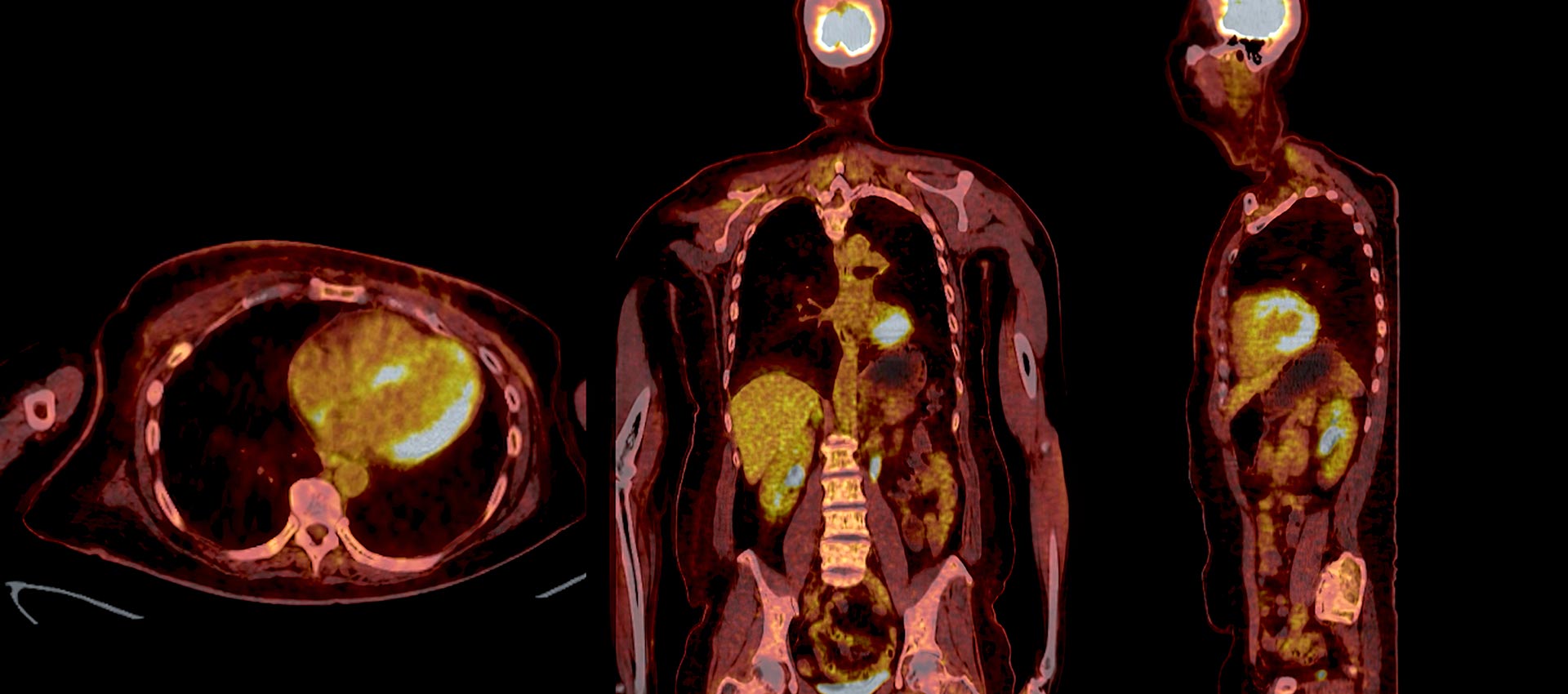
Nuclear Medicine/PET Imaging
Nuclear Medicine and Positron Emission Tomography (PET) are advanced imaging techniques that provide unique insight into how the body functions at a cellular level. Unlike traditional imaging, which shows structure, these studies
reveal metabolic activity--allowing for earlier detection, more accurate diagnosis, and precise monitoring of disease.
What these Exams Evaluate
Nuclear Medicine and PET imaging are commonly used to:
- Detect and monitor cancer
- Evaluate heart function and blood flow
- Assess brain disorders, including neurologic conditions
- Evaluate organ function, including thyroid, kidneys, and bones
How it Works
These exams use a small amount of radioactive tracer, which is introduced into the body--typically through an injection, but sometimes by mouth. The tracer travels to targeted areas, where specialized imaging equipment detects and creates detailed images based on cellular activity.
Because these studies evaluate function rather than just anatomy, they often detect abnormalities before structural changes become visible on other imaging exams.
PET/CT Imaging
PET imaging is often combined with CT to provide both functional and anatomical detail in a single exam. This integration allows for more precise localization of abnormalities and supports more informed treatment planning--particularly in oncology.
Preparation
Preparation varies depending on the type of exam. For many PET studies, you may be asked to fast for several hours beforehand. Specific instructions will be provided before your appointment.
During the Exam
After receiving the tracer, there is typically a short waiting period to allow it to distribute within the body. The imaging portion is painless and generally takes 20-45 minutes.
After the Exam
Most patients can return to normal activities immediately. Drinking fluids may be recommended to help clear the tracer from your system.
Safety and Precision
Nuclear Medicine exams use very small amounts of radioactive material and are considered safe for most patients. Every study is carefully tailored to use the lowest effective dose while delivering accurate, high-quality results.
Advanced Insight for Better Care
By revealing how tissues and organs are functioning, nuclear medicine and PET imaging provide critical information that guides diagnosis, treatment planning, and ongoing care. This functional perspective is essential in delivering more personalized, effective care.
For more information about CT scans and other imaging procedures, radiologyinfo.org